




By BLS Scholar Zenani Johnson
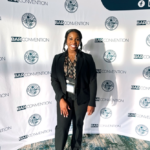 Every law student should attend their state’s Bar Convention at least once. Students should also consider joining and engaging with the various sections of their State Bar as student members. Attending committee meetings, educational programs, and networking events can provide valuable exposure to the profession while also helping students to develop meaningful relationships with attorneys and judges. From June 17 through June 19, I attended three days of The Florida Bar Annual Convention as a newly selected Business Law Section Scholar. Through committee meetings, educational programming, luncheons, and receptions, I moved from learning about the legal profession in the classroom to experiencing it firsthand. What I expected to feel somewhat similar to law school orientation became a life-changing experience that gave me meaningful connections, a sense of community, and clarity about my role as a law student, including what to expect as I prepare to enter the profession.
Submitted by: Zenani D. Johnson, 3L, Florida State University College of Law; Business Law Scholar, Business Law Section of The Florida Bar; Fellow, FSU Stoops Center for Law and Business.
Connection: The Right Place at the Right Time
When I arrived at the convention center on June 17, I was immediately met with suits, laptops, handshakes, and smiling faces. As I walked toward my first meeting, I encountered Justice Adam S. Tanenbaum casually introducing himself and conversing with colleagues. I reintroduced myself, and he warmly remembered me from my time as a Florida Supreme Court Fellow.
As I made my way towards the Business Law Section’s membership meeting, I encountered Florida Supreme Court Justices Jamie R. Grosshans and John D. Couriel. Within my first thirty minutes at the convention, I went from feeling lost to interacting with three members of the Florida Supreme Court.
During Thursday’s Business Litigation Committee meeting, I walked into the room and sat beside someone I assumed was another practicing attorney. To my surprise, I was sitting next to United States District Judge Darrin P. Gayles. When the committee recognized him as the Federal Court Liaison. I was in awe—sitting beside someone I had read about for years but never imagined I would meet. Judge Gayles shared words of wisdom with me about the importance of finding a strong mentor, remaining disciplined, identifying where I wanted to go in the legal profession, and understanding the steps necessary to get there. I truly appreciated his words of wisdom.
Throughout the convention, I also met shareholders, partners, associates, professors, judges, and recent graduates. Many took the time to learn about me, ask about my future plans, and offer career advice. These moments reminded me that some of the most valuable professional connections begin with a simple introduction, a genuine conversation, and being in the right place at the right time!
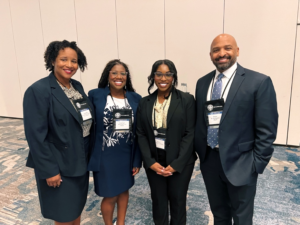
Community: “If You Want to Go Fast, Go Alone; If You Want to Go Far, Go Together”
Throughout the meetings and programs, I witnessed the strength, collegiality, and commitment of Florida’s legal community.
During the Business Law Section’s Membership Committee meeting, I saw firsthand how attorneys manage being pulled in multiple directions while still remaining “where their feet are.” Many attorneys serving in section leadership and committee positions maintain demanding full-time legal careers, yet they volunteer their time to attract and engage new members, mentor others, exchange referrals, which strengthens the profession statewide. Their dedication reminded me that the “hustle” we experience as law students prepares us for the many responsibilities we may eventually carry as attorneys.
This spirit of service was also evident during Thursday’s Legislation Committee and Executive Council meetings. Attorneys discussed trademarks, virtual currency kiosks, and other legislative priorities, while also volunteering to prepare white papers, review proposals, offer expert guidance, and advocate for legislation. Their work demonstrated that attorneys serve not only their individual clients but also the broader legal system and the communities affected by it.
I witnessed the same sense of community during the Judicial Luncheon. I heard the State of Florida’s Judiciary address and saw members of Florida’s judiciary, from the local to the federal level, gathered in one room, engaging in discussions about the future of Florida’s court system.
My Thursday committee meetings concluded with the Business Law Section Executive Council meeting, where practicing attorneys, members of the judiciary, and section leaders discussed the future of the Section. For the first time, I fully understood that entry into the legal profession must be earned, but it is also a community that welcomes its future members with open arms. It is filled with people who are eager to pour into the next generation of attorneys and pass along not only the torch, but also the knowledge they have gained.
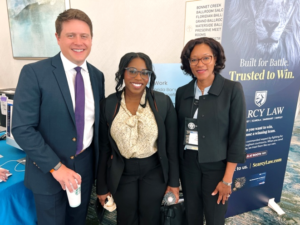
Clarity: If You Can See It, You Can Be It
In addition to developing connections and experiencing a strong sense of community, the convention gave me clarity about my role as a law student and what to expect as I prepare to enter the legal profession.
My Thursday meetings began with the State & Federal Court Judicial Liaison meeting. I initially thought I would simply observe, but the meeting quickly became an engaging brainstorming session. I had the opportunity to sit alongside practicing attorneys and federal judges as they identified conversations that needed to occur regarding the ever-changing legal landscape. I realized how much more I have to learn about the overlapping responsibilities of federal and state courts and the unique issues presented within each system.
Later that morning, I attended the Business Litigation Committee meeting and a Continuing Legal Education (CLE) presentation on Proving Economic Damages in Litigation. The presentation was especially enlightening because I watched concepts from my first-year Torts course come to life. I saw how practicing attorneys apply foundational legal principles to develop cases and litigation strategies that may produce favorable outcomes for their clients. The presentation also challenged my assumptions about CLE requirements. I learned that CLE programs can be engaging and contribute meaningfully to an attorney’s professional development long after law school.
That afternoon, I intentionally attended the Bankruptcy/UCC Committee meeting because I had not previously been exposed to bankruptcy law. I learned that bankruptcy proceedings are designed to move quickly to help businesses remain open and workers remain employed. I also learned about ongoing efforts to refine service of process and virtual procedures to support the continued effectiveness of bankruptcy proceedings.
These experiences showed me that practicing law involves much more than appearing in a courtroom. Attorneys educate themselves throughout their careers, serve on committees, contribute to legislation, mentor others, build professional relationships, and work collaboratively to improve the legal system.
I also saw that pro bono service is not simply a term used by Florida attorneys, but a value ingrained within the profession. During the Executive Council meeting, I learned about the Senior$mart$ program, which helps older and potentially vulnerable Floridians recognize scams and protect their financial well-being. The initiative is particularly meaningful for seniors living on fixed incomes and navigating an increasingly complex technological and financial landscape.
The convention also gave me clarity about my role as a law student. I learned that I do not have to wait until graduation to begin contributing to the profession. Law students can participate in committee meetings, offer their perspectives, ask thoughtful questions, build relationships, and learn from those who have already traveled the paths they hope to pursue.
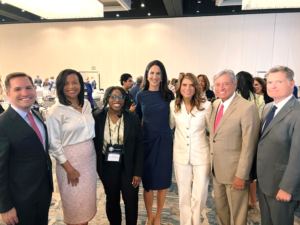
Why Every Law Student Should Attend:
Throughout the three days I attended The Florida Bar Annual Convention, I participated in committee meetings, attended a CLE presentation, explored unfamiliar practice areas, and learned how attorneys contribute to legislation and the legal profession. Most importantly, I met legal professionals who possessed the knowledge, experience, and influence to shape not only the future of Florida but also the trajectory of my life.
Law students spend years learning what it takes to enter the legal profession. A state bar convention allows them to see that profession operating in real time and recognize that there is a place for them within it.
Unfortunately, the costs of registration, travel, and lodging can prevent students from attending what can be a life changing opportunity. Law schools, state bar associations, and bar sections should work together to publicize these opportunities, provide financial support when possible, and create intentional ways for students to participate in this immersive conference experience. At the same time, law students must express an interest, seek out opportunities, and arrive prepared to fully engage.
Increasing law student participation requires a shared commitment. The convention gave me more than professional exposure. It gave me connections with members of the legal profession, a sense of community within The Florida Bar, and clarity about my role as a law student. I am forever grateful for my first, but definitely not my last, experience at The Florida Bar Annual Convention. I left even more ready and eager to enter the profession as an attorney licensed in Florida.
Special thanks to the Florida State University (FSU) College of Law and the FSU Stoops Center for Law and Business for supporting my attendance, and to the Business Law Section of The Florida Bar for the opportunity to serve as a Business Law Scholar during the 2026–2027 academic year.